I always say the best post topics come straight from real job seekers (like you). And this week, my idea came from a former co-worker who recently went through the whole job search process. She had two questions: "What's the best subject line for an email in response to a job ad?" and "Should you attach the cover letter to the email, or copy and paste it into the body of the email?" I always wondered this myself, so I did some research and here's the consensus:
Best Email Subject Line:
Jane Johnson resume for sales service position
It's straightforward and informative. It tells the recipient who you are, what you're sending, and why you're sending it.
This isn't a concrete formula, however. Since some job ads require you mention a job posting ID number when you apply, you should substitute the name of the position with the number. Example: Jane Johnson resume for Job #5527.
Best Way to Include Your Cover Letter:
Copy and paste your cover letter into the body of the email.
Why is this the preferred method? Three reasons: 1) It gives the recipient one less attachment to open, 2) It gets to the point faster than writing the awkward "here is my resume and cover letter" mumbo jumbo, and 3) It gives you the ability to make an impact as soon as the recipient opens your email. However, if you send your cover letter out using Pongo's cover letter builder, the application will paste a copy of your letter in the email and add one as an attachment. This way, employers can see your value up front and have the option to save the attachment too.
Need to build a cover letter? Pongo's Cover Letter Builder provides over a dozen cover letter templates with fill-in-the-blank sample text, best practice advice, and sample phrases to help you get started. You can even email your cover letter directly from your Pongo account. Build your cover letter today!
In this case, some of the typical cover letter rules would not apply. While a regular cover letter would include "To" and "From" addresses, email requires a different format. Skip the "To" and "From" but include the date, reference line, greeting, body, professional closing, and signature. Here's an example of what an email cover letter would look like:
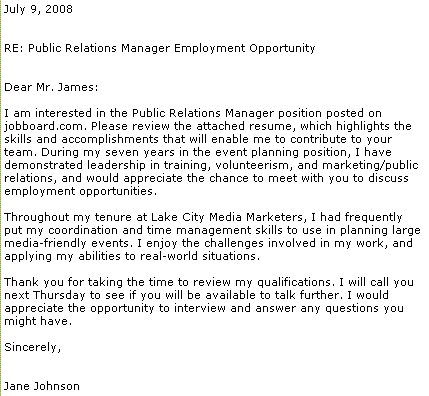
Be sure to attach your resume to your email. And as always, refer to the company's job posting and apply, using whatever guidelines they specify. Adhering to the employer's guidelines will not only ensure your documents get to the right place at the right time, it will prove that you pay attention to details and follow instructions!
RELATED LINKS
How to Find a Name for Your Cover Letter Greeting
5 Basic Cover Letter Questions Answered
What to Say in Your Cover Letter
Ready To Jump Start Your Job Search?
